Individualized One-on-One Therapy
Personalized virtual instruction responds to each student's literacy skills, learning challenges, pace, and progress.
Dyslexia Shift | Academic Language Therapy
Take Flight | Comprehensive Dyslexia Intervention
Take Flight is a comprehensive, two- to three-year structured literacy curriculum based on Orton–Gillingham methodology. It is designed to help students with dyslexia develop the foundational language skills necessary for accurate reading, spelling, writing, and comprehension.
Developed by Dyslexia Specialists: Take Flight was developed by the staff of the Luke Waites Center for Dyslexia and Learning Disorders at Texas Scottish Rite Hospital for Children in Dallas, Texas, now known as Scottish Rite for Children.
Designed for Students Ages Seven and Older: Take Flight is intended for individuals with dyslexia who are generally seven years of age or older. Younger learners may benefit from Pre-Flight, an early literacy program designed to strengthen foundational skills before more comprehensive intervention.
Delivered by a Certified Academic Language Therapist: Take Flight is designed for instruction by a Certified Academic Language Therapist (CALT) who has specialized training in structured literacy and dyslexia intervention.
Explicit, Systematic, and Cumulative Instruction: Reading, spelling, and writing concepts are taught directly through a carefully organized sequence. Each new concept builds on previously learned skills, with regular review and guided practice to support accurate application and retention.
Integrated Reading, Spelling, and Writing: Rather than teaching literacy skills in isolation, Take Flight connects decoding, encoding, handwriting, vocabulary, and comprehension within a coordinated instructional framework.
Individualized Academic Language Therapy: Instruction is responsive to each student's learning profile, existing knowledge, areas of difficulty, and progress. Lessons provide opportunities for targeted practice, immediate feedback, and ongoing skill development.
Multisensory Structured Language Instruction: The curriculum incorporates visual, auditory, and kinesthetic-tactile activities. Students connect what they see, hear, say, and write while learning the relationships between speech sounds and written language.
Five Essential Components of Reading: Take Flight addresses phonemic awareness, phonics, fluency, vocabulary, and reading comprehension, reflecting the major components identified by the National Reading Panel.
Intensive Dyslexia Intervention: Take Flight is designed as a comprehensive intervention for students requiring specialized, intensive literacy instruction. Its structured approach is particularly relevant for learners whose reading and spelling difficulties have persisted despite conventional classroom instruction.
Growth in Reading Skills: Research examining Take Flight has reported improvements in important areas of reading development, including word reading, decoding, and related literacy skills.
Retention and Continued Development: Follow-up findings have indicated that students can maintain improvements in word-reading skills and continue developing reading comprehension after instruction.
Implementation by Trained Educators: Research has examined the effectiveness of Take Flight when delivered by educators with advanced preparation in dyslexia intervention and structured language instruction.
Support for Students with Significant Reading Difficulties: Findings have reported meaningful gains among students who began instruction with substantial reading challenges. Individual outcomes vary according to learner needs, instructional intensity, and other factors.
Read the Take Flight Research Summary from Scottish Rite for Children.
Lessons reinforce recognition, naming, and sequencing of alphabet letters. These foundational skills support accurate reading, spelling, handwriting, and the development of reference skills such as using dictionaries and other language resources.
Students practice identifying graphemes, which are letters or letter combinations representing speech sounds, and producing their corresponding sounds accurately and efficiently. Repeated practice supports automatic recognition of sound-symbol relationships.
Take Flight systematically teaches 96 grapheme-phoneme correspondences. Students learn how written letters and letter combinations represent speech sounds and apply this knowledge when decoding unfamiliar words.
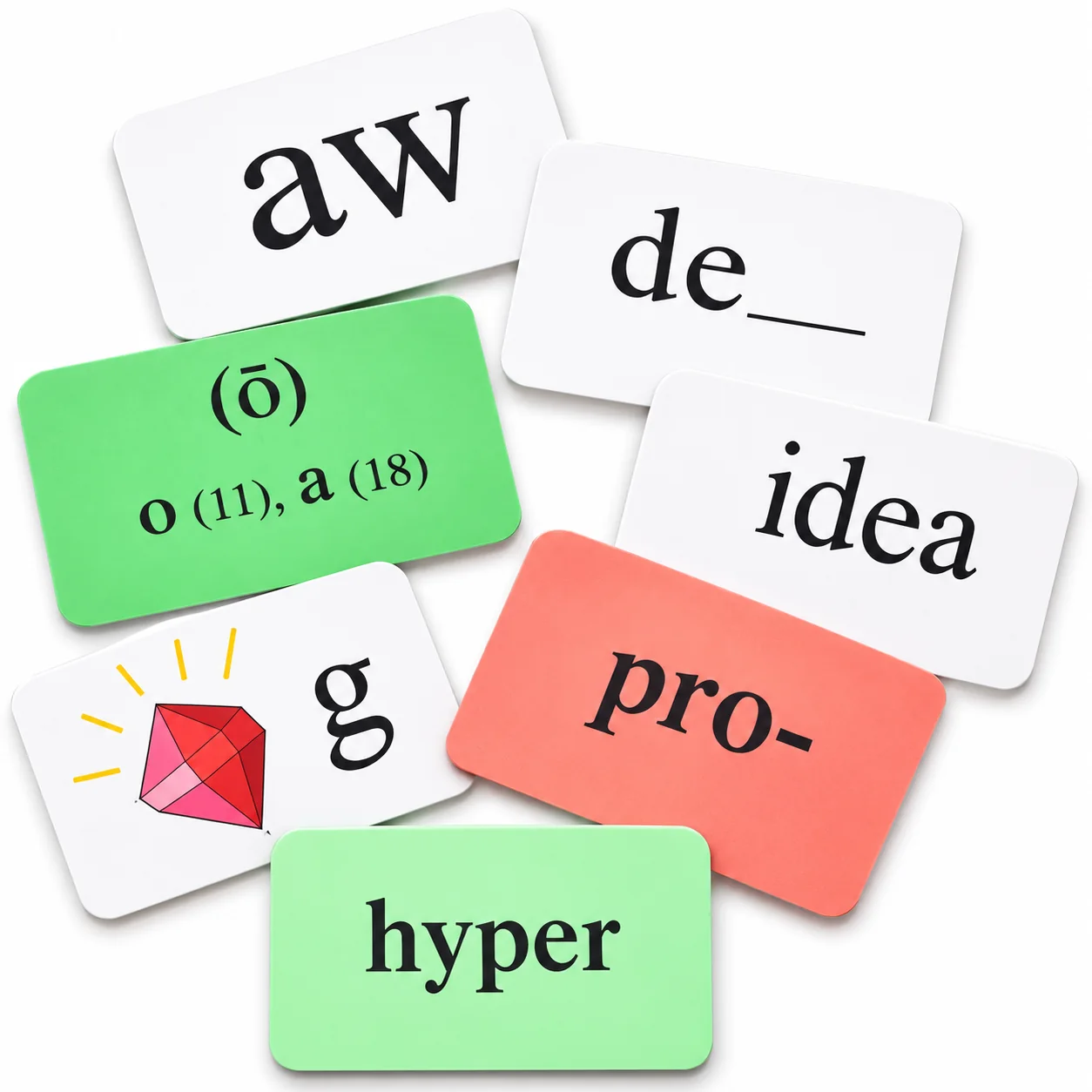
New letters, letter combinations, and language concepts are introduced through six multisensory linkages. These activities connect visual, auditory, and kinesthetic-tactile experiences while reinforcing reading, spelling, and writing concepts.
Cursive handwriting is incorporated throughout the program. Students practice identifying and naming letters before writing them, strengthening the connections between letter recognition, motor patterns, and written language.
Students learn systematic word-analysis and coding strategies to identify spelling patterns and decode words accurately. These strategies provide visual and kinesthetic cues that support the application of phonics knowledge, including situations where letters or letter combinations represent more than one sound.
Students practice reading frequently occurring English words, including words drawn from Edward Fry's high-frequency word research. The goal is to develop increasingly accurate and automatic recognition of commonly encountered written words.
Repeated Automatic Practice reinforces rapid and accurate recognition of letter names, speech sounds, and their application in words. Consistent practice helps students develop automaticity, an important foundation for fluent reading.
Students practice hearing individual speech sounds and identifying the letters or letter combinations that commonly represent them. This activity strengthens the connection between phonemic awareness and accurate spelling.
Explicit activities teach students to identify, blend, segment, and manipulate individual speech sounds. Instruction also develops awareness of how speech sounds are produced and how they connect to written spelling patterns.
Students apply previously taught sound-symbol relationships through structured spelling activities. They connect spoken sounds to written letters, reinforce spelling conventions, and practice encoding words using systematic strategies.
Take Flight includes instruction in 87 affixes and emphasizes English morphology, including prefixes, suffixes, Latin roots, and Greek combining forms. Understanding meaningful word parts helps students analyze unfamiliar words, strengthen spelling, and expand vocabulary.
Fluency instruction begins with accurate reading at the word level and gradually progresses to phrases, sentences, and connected text. Repeated reading activities support automatic word recognition, appropriate reading rate, expression, and phrasing.
Students engage with meaningful, high-interest texts through independent reading, supported reading, and listening activities. These experiences connect foundational decoding skills with vocabulary, language understanding, and comprehension.
Reading comprehension instruction includes narrative and informational texts. Students develop skills in identifying important information, understanding story structure, making inferences, summarizing, reasoning, monitoring comprehension, and applying critical thinking strategies.
Instruction connects receptive and expressive oral language with written communication. Students practice organizing ideas, developing sentences, applying language conventions, and expressing information clearly through spoken and written responses.
Students explore how the history and development of English influence modern spelling patterns, vocabulary, and word structure. Understanding these connections helps explain why words are spelled and pronounced in particular ways.
Lessons conclude with opportunities to review newly introduced concepts and reinforce previously learned material. Cumulative practice supports retention, strengthens accuracy, and prepares students to apply their knowledge to increasingly complex reading and writing tasks.
Personalized virtual instruction responds to each student's literacy skills, learning challenges, pace, and progress.
Explicit, systematic, cumulative instruction integrates phonemic awareness, decoding, spelling, fluency, comprehension, and writing.
Learn through a comprehensive dyslexia intervention delivered by a Certified Academic Language Therapist using structured, multisensory teaching methods.
Develop stronger foundational literacy skills through guided practice, ongoing review, and opportunities for meaningful progress.

Every child deserves the opportunity to become a more confident and independent reader. At Dyslexia Shift, I provide individualized, one-on-one virtual Academic Language Therapy using the comprehensive Take Flight curriculum. If your child struggles with reading, spelling, or written language, let's discuss their learning needs and whether Take Flight may be the right intervention.
Book a Free Consultation